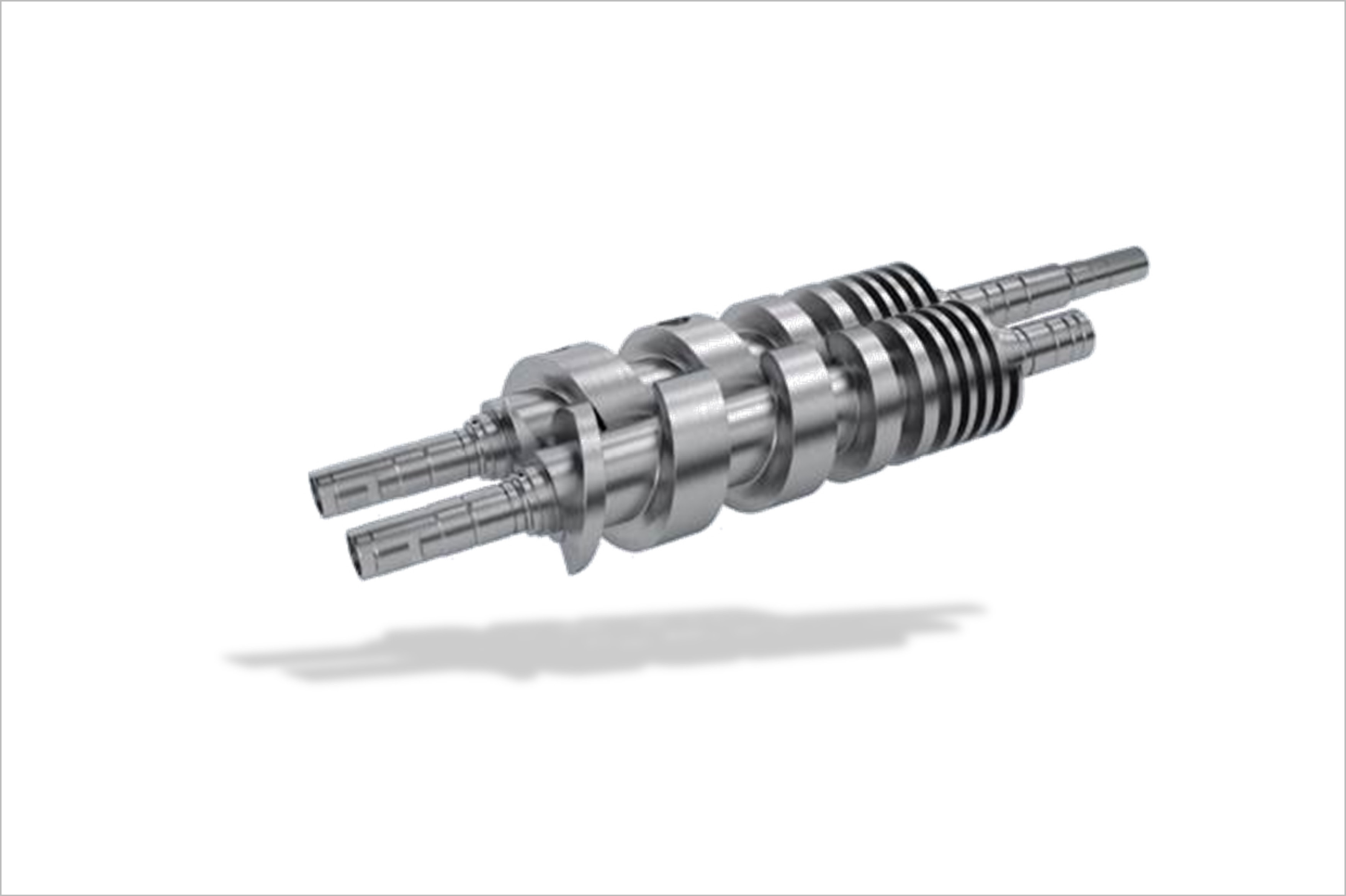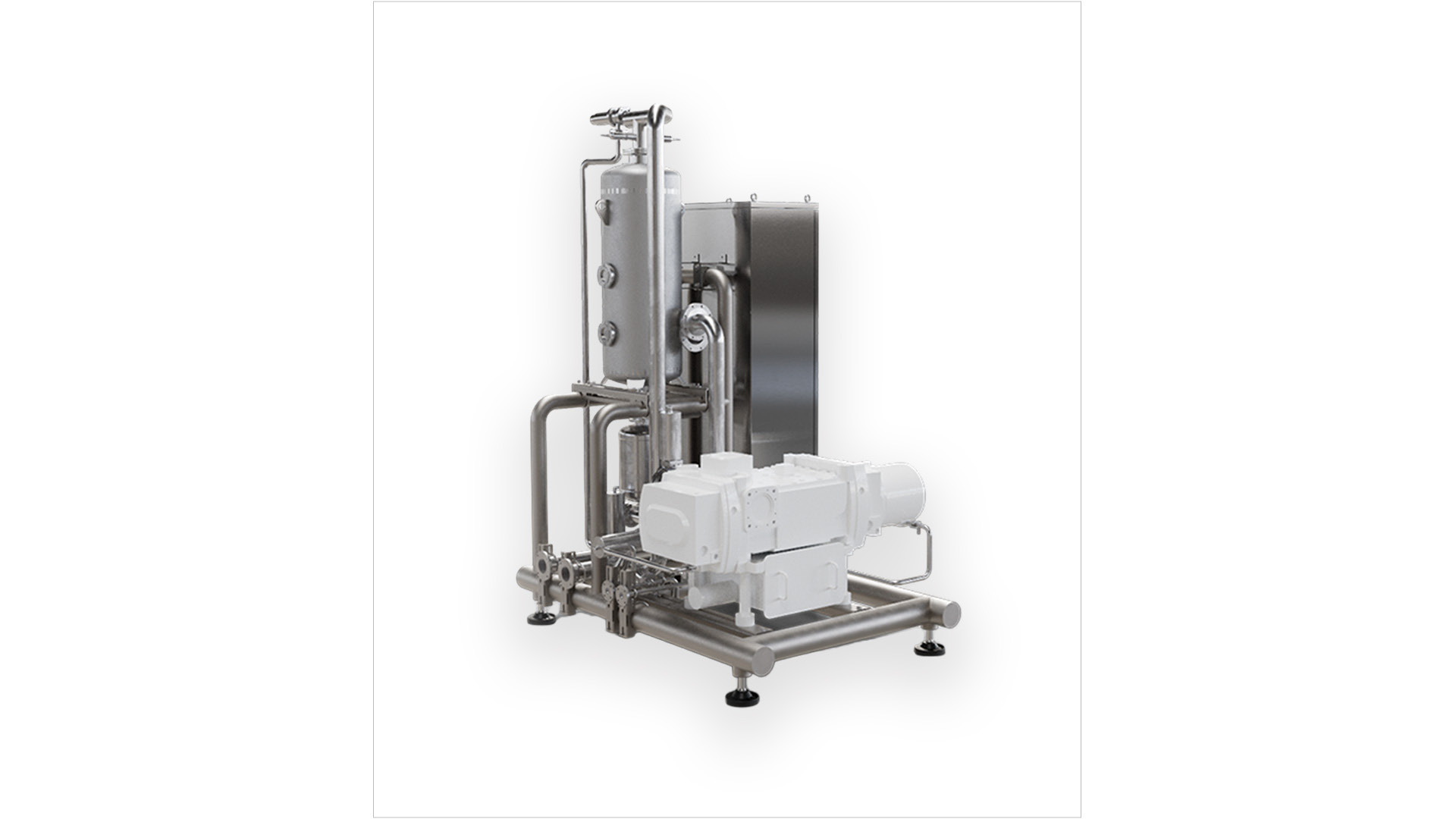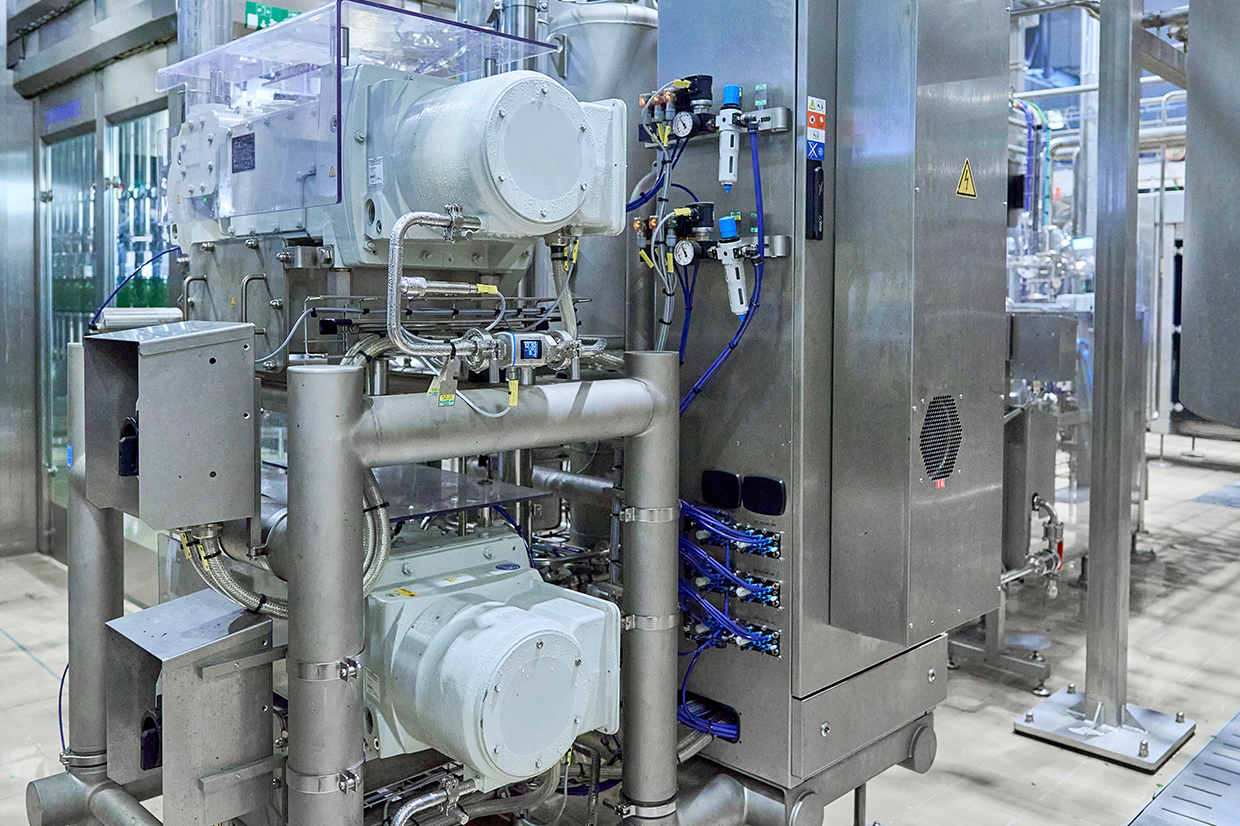
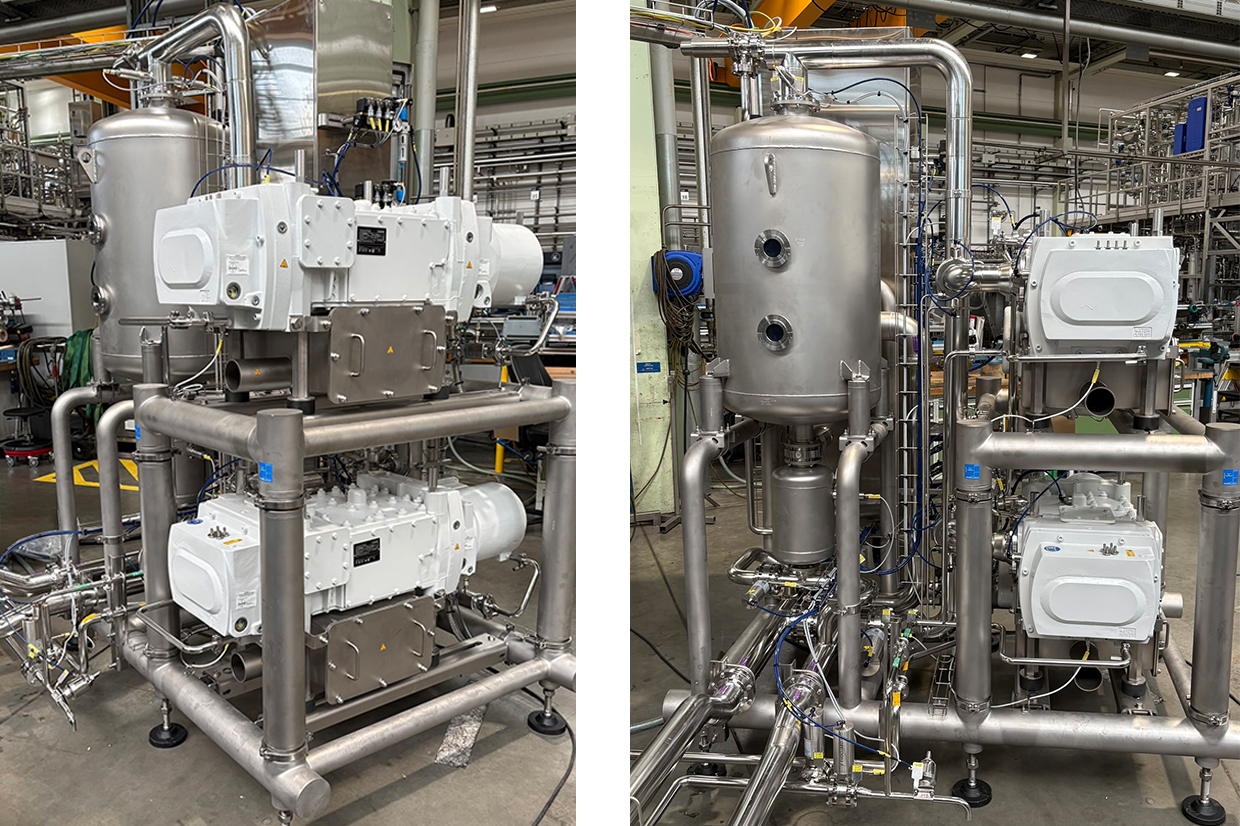
Every brewery knows that low total packaged oxygen (TPO) is proof of top beer quality. So they take all sorts of measures to minimise oxygen pick-up, such as evacuating the glass bottles prior to filling. Until now, liquid ring vacuum pumps have mostly been used for that. However, dry vacuum pumps could do the job a lot more efficiently because they need 25 per cent less power and reduce water consumption to almost zero. Dry-vacuum technology has long been well-established in other fields of the food industry, so why not use it in beer filling, too? The challenge here is that tiny amounts of beer remain in the filling valve after filling. These residues are drawn into the pump when the next bottle is evacuated. Whereas liquid ring pumps can take a fair bit of that soiling, dry vacuum pumps can’t. For a long time, there was no viable solution to this. In the early 2000s, Krones joined the ranks of those trying to find one – but to no avail. However, tinkerers never really give up on a problem they’ve been unable to solve. And since pumps have steadily evolved and saving water has become more important than ever, Krones decided to give it another try. This time, they succeeded.
Dry vacuum pumps are a real game changer for evacuating glass bottles.