Krones Group Annual Report 2025
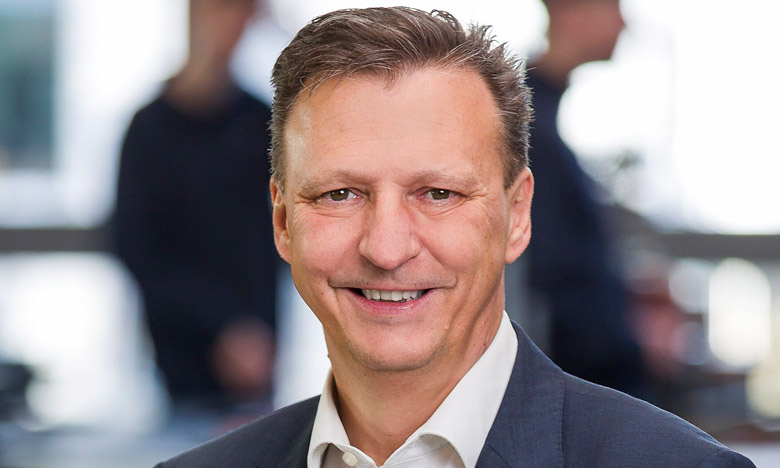
“In our steadily growing markets, Krones is strengthening its market position and resilience by expanding its global footprint and innovative capacity.”, Christoph Klenk, CEO
Strategy and management system
2025 has demonstrated once again that Krones is very well positioned in stable markets. Despite many unexpected geopolitical and trade policy challenges, primarily triggered by global tariff policies, the company has maintained its profitable growth path. The beverage and liquid food industry’s willingness to invest remained robust despite the overall economic uncertainties. This past financial year has also shown that in such volatile times, the strategic expansion of Krones’ global footprint is essential to our ongoing business success. The same applies to the steadily growing Krones team. Thanks to their motivation and flexibility, our employees enabled us to further shorten delivery lead times in 2025 and to provide an impressive demonstration of our innovation leadership at drinktec 2025.
Megatrends ensure stable medium to long-term demand growth
We are planning for the future with realistic optimism. The steadily growing and cyclically resilient food and beverage market benefits from megatrends. Global population growth, the rise of the middle classes in emerging markets and the continuing increase in urban populations, particularly in emerging and developing countries, are all driving demand for packaged beverages. Sustainability is another factor that supports demand for Krones products on a long-term basis, because customers have to achieve their ambitious climate targets and in particular save costs. As one of the internationally leading providers of resource-efficient beverage filling and packaging technology, and as a process technology and intralogistics solution provider with a comprehensive product and service portfolio and global service network, Krones is ideally placed to capitalise on the opportunities in this attractive market.
Irrespective of the positive overall outlook for our markets, assessing and evaluating various risks is an essential part of our corporate strategy. The ongoing geopolitical and economic uncertainties influence our customers’ willingness to invest. Escalating conflicts can have a negative impact on supply chains and on energy and commodity prices – and ultimately on the global economy. Potential trade conflicts between the major economic blocs comprising the US, China and Europe would severely impact global trade and weaken global economic growth. A further risk in the long term is the limited availability of natural resources for our customers. The resulting focus on economic sustainability presents opportunities for Krones.
To achieve the profitable growth essential to Krones’ future success, we are implementing a series of strategic measures consistently and sustainably in all three segments.
Expanding the global footprint strengthens resilience
By expanding its global value chain, Krones is improving its cost structures. Diversifying production and supply chains also enhances resilience to economic and political risks such as trade barriers, regional supply chain problems and production stoppages. Additionally regionalising value creation enables us to provide our customers with a rapid, cost-effective and low-emission supply of products adapted to each market.
We generate around 20% of our global revenue in the USA. Because of local production, only about half of that – around 10% of revenue – is affected by the US tariffs. With some €50 million in investment in our sites there, we will significantly increase production in the USA, above all in the core segment, in part so that US import tariffs have less of an impact on the company.
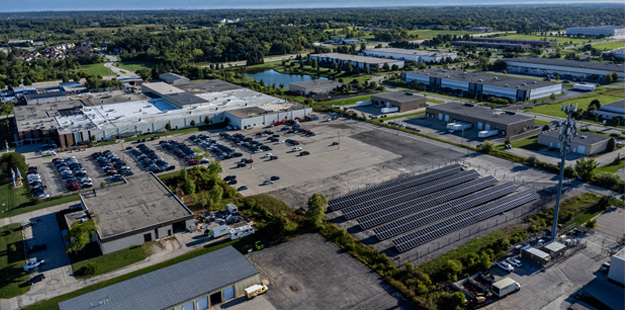
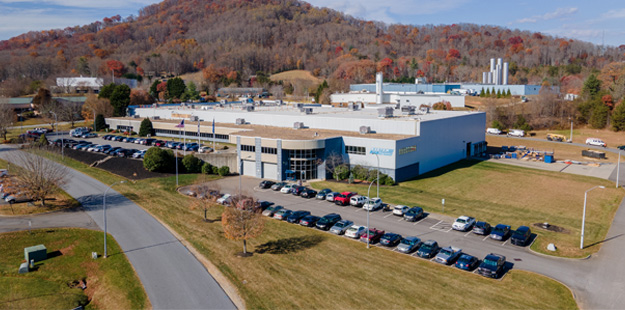
After successfully establishing a production site and the associated supply chains in Hungary, the company has now significantly expanded the Taicang site in China. From the second half of 2026, the production of various core--segment products (including conveyor belts, aseptic systems and labellers) will be expanded in order to serve the Chinese market quickly and cost-effectively. The workforce in Taicang of around 900 employees in the reporting period is set to increase further in the medium term.
For the fast-growing Indian market, Krones is building a new production site that is scheduled to go into operation in the second half of 2026. The plant is -being built in several phases. When completed, it will house the assembly of, for example, the ErgoBloc L series, Compact Class products and dry-section -machines, plus spare parts manufacture. Young employees will also be able to complete their apprenticeships at the new plant. Our existing Indian site in -Hyderabad is undergoing substantial capacity expansion for solutions from the Process Technology segment.
The continued high level of investment in German locations is primarily being channelled into the automation of production and production logistics. In this way, we are increasing efficiency and securing the competitiveness of our domestic sites. Overall, in the coming years, we intend to progressively increase the proportion of value added generated internationally by the Krones Group.
Disciplined price strategy the foundation for profitable growth
Alongside the development of costs, another key profitability factor for Krones is selling prices. With the aid of our innovative, value-added solutions, our dense global service network and reliable completion of projects for our international customers, we are able to obtain adjusted prices despite the cost trend. Despite the ongoing intense competition for orders, we are sticking to our disciplined price strategy.
Solutions beyond tomorrow
Innovation: the basis for sustained business success
Innovativeness is a core element of the Krones strategy. New and improved products and services are crucial to Krones’ long-term success. High-quality, technologically leading products and services are key to maintaining high levels of price realisation. For many years, Krones has therefore invested large sums amounting to between 4% and 5% of revenue in research and development (R&D).
Krones’ focus in innovation is on the thematic areas of digitalisation, system solutions and economic sustainability. Working in dialogue with customers and on the basis of their needs and requirements, we quickly develop solutions that deliver measurable added value and support them in achieving their goals. All innovations contribute to major priorities for customers, such as lower operating costs, higher efficiency, lower media and energy consumption, and production reliability.
The new, highly innovative Ingeniq line concept is a prime example. Ingeniq was predominately developed on the basis of detailed customer feedback from drinktec 2022 and already went into service with a customer in early 2025. This also marks a milestone in terms of innovating speed.
We present our R&D strategy and a selection of our innovations from the reporting period on pages 71 to 77.
Flexibilisation and optimisation of cost and organisational structures
One of our core strategic priorities is to further improve Krones’ cost base and organisational structure and to reduce fixed costs as a percentage of total costs. We address dynamic and unforeseen challenges with flexibility and agility. Being able to respond swiftly to changing economic conditions strengthens our resilience.
To this end, Krones is accelerating, digitalising and automating internal processes and workflows. Closer collaboration and shorter decision lines also help to reduce order throughput time – the total time from quotation to delivery. Krones is also implementing cost and efficiency improvement programs in almost all areas.
Solutions beyond tomorrow: taking sustainable responsibility
With its corporate vision of “Solutions beyond tomorrow”, Krones contributes to three key challenges confronting humanity: slowing climate change, feeding the world, and ensuring responsible use of packaging materials. We also focus on our customers’ challenges and support them in solving them. This gives rise to the company’s strategic orientation around the three core areas of digitalisation, service quality and economic sustainability. These areas also determine the strategic orientation of our three segments.
Digitalisation
Digitalisation increases beverage plant efficiency and is the basis for future service business
To remain competitive, beverage and food manufacturers must produce as efficiently and flexibly as possible. Digitalising production helps them identify and leverage numerous opportunities for improvement, save resources and prevent disruptions and stoppages. Another advantage for customers is that as digitalisation increases, the need for production labour decreases. This helps to alleviate the skills shortage and save costs.
When it comes to the digitalisation of beverage plants, Krones benefits from its line and factory expertise – knowledge of how to perfect the interoperation of numerous individual machines and lines. All new Krones lines are fully digital-ready (Connected Line). More than 500 lines are already connected to the Krones digital platform and the company offers a wide range of related digital products and services. These create added value for customers through enhanced product safety, more reliable production, lower resource consumption and, overall, reduced total cost of ownership (TCO).
Digital, expert support – for the entire line lifecycle
Krones’ goal is to provide digital support throughout the entire lifecycle of a machine or line and focus the business model more closely on services. An important building block in this regard consists of our individually selectable and coordinated service packages known as Modular Service Agreements (MSAs). With over 1,200
MSAs now in place, the Krones service team support plant operators in measurably improving production efficiency and achieving clearly defined targets. Krones analyses and interprets the data collected by the digital tools and shows line operators possible measures for improving line performance. Customers additionally benefit with fixed and predictable costs.
The most important component of the new Ingeniq line generation (see page 58) is Lifecycle Alliance – a service partnership with customers across the entire lifecycle. In the Lifecycle Alliance package, Krones assumes responsibility for agreed performance, efficiency and lifecycle costs.
MSAs, which also include the globally available lifecycle service (LCS) products, enable Krones to increase customer loyalty and generate a stable long-term revenue stream.
In total, approximately 1,600 people work on digitalisation initiatives across the Krones Group. Of these, around 700 software and IT engineers are now employed at the Krones.digital unit on the development of digital products and services. Additionally, some 100 service professionals provide customers with support at seven digital service centres around the world.
Krones also reaps the benefits of digitalisation within the business. Numerous work operations and processes are accelerated and automated using digital tools like artificial intelligence (AI). This shortens internal and external turnaround times while also improving customer satisfaction.
Service
Expanding the global service network: customer proximity a key investment criterion
Looking after the delivery of digital and other services is the job of our approximately 3,000 local service technicians in over 70 countries around the world. It is they who respond quickly and directly to customer needs – a key factor in long-term customer satisfaction. Our strategically well-located LCS centres enable us to quickly supply plant operators with spare parts and thus reduce downtimes.
Further strengthening after-sales business
A medium and long-term growth driver for the attractive LCS business is the continuously growing installed base of Krones machines, systems and lines. Krones also intends to further increase the proportion of Krones-supplied supported lines to drive long-term growth in the after-sales business.
In order to meet the growing demand for high-quality service, Krones will continue to invest heavily in the expansion of service structures. The focus is on markets with above-average growth in the Asia/Pacific and Middle East/Africa regions. Krones will expand its already strong footprint there in the medium and long term.
We will further strengthen our already comprehensive, pan-regional after-sales support for our customers. For this purpose, Krones primarily deploys local staff, who can be on site faster and speak the local language, both of which are key advantages for customers. We have consequently launched activities and projects to find, train and retain suitable service technicians worldwide. In Kenya, for example, Krones is one of the most important corporate providers of apprenticeship training. Our goal is to grow the international service team by around 100 employees each year in order to meet our customers’ growing service needs.
In the reporting period, the company once again increased the size of its workforce in the regions shown below by 6.4% to 7,572 employees.
Sustainability
Sustainability: key pillar of corporate strategy
For Krones, sustainability, together with related goals, remains a key anchor of our corporate strategy – regardless of any external influences or developments. We firmly believe that a consistent approach to sustainability will help us leverage future new opportunities for growth. Accordingly, we use resource-efficient production processes, develop energy-efficient machinery and are working on circular economy solutions. In line with the “Solutions beyond tomorrow” vision, Krones aims to contribute significantly to combating climate change and conserving resources.
Krones sets net zero emissions target for 2040
The Group has adopted the strategic goal of reducing its greenhouse gas emissions along the entire value chain to net zero by 2040. This places Krones Group’s net zero strategy in line with the 1.5-degree Celsius target in the Paris Climate Agreement.
For the implementation of its climate strategy, the company has also set milestones through to 2030. The company aims for an 80% reduction in operational greenhouse gas emissions (Scope 1 and Scope 2) and a 30% reduction in Krones’ upstream and downstream value chain emissions (Scope 3) by 2030 relative to 2019. At the end of the 2025 financial year, we stand at a 52.0% reduction in Scope 1 and Scope 2 and 7.5% in Scope 3. ¹
¹ ESRS 2 SBM-1 40g, 42b
Krones supports customers with their climate targets: sustainability remains important innovation and growth driver
Our major customers have ambitious climate targets as part of their strategy. They need resource-efficient machines and lines to reduce their carbon footprint, meet their climate targets and lower costs.
With our TÜV-certified energy and media-efficient product range, customer save valuable resources and hence costs in the operation of their lines. Krones expects that the proportion of energy and media-efficient productssold will continue growing in the coming years.
In order to actively manage our contribution, we have set specific product-related sustainability targets. These relate to the energy and media-efficient operation of our products and technologies and contribute to the transition to a circular economy.
In addition, our energy and sustainability consultants support and advise customers around the world in their sustainability transition. They help customers reduce their ecological footprint and operating costs, both for existing systemsand for new lines. ¹
¹ ESRS 2 SBM-1 40 a i-ii, 40f, 40g, 42b
Plastics recycling: a key unique selling point (USP)
Plastic is a valuable resource that should not end up as waste in the oceans or on land. If we are to solve the global problem of plastic waste, high-quality plastics need to be recycled wherever possible. This reduces emissions from the production of plastic packaging, makes us less dependent on fossil resources and avoids waste.
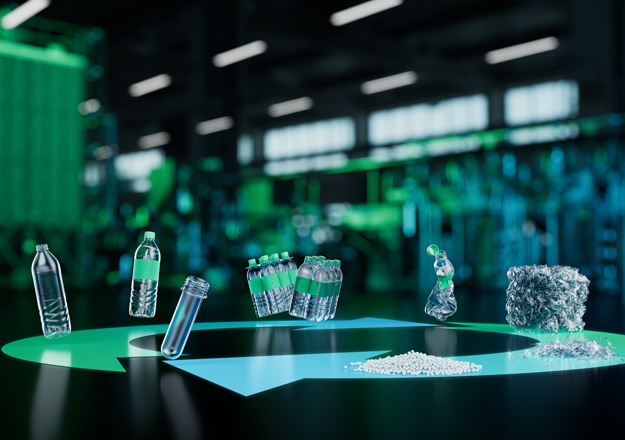
Over the next few years, many beverage producers will significantly increase the amount of recycled PET (rPET) in their packaging in order to reduce plastic consumption. Krones can and will provide customers with optimum support for environmentally friendly and sustainable circular solutions. Acquiring injection moulding machine manufacturer Netstal (in 2024) enabled us to complete the recycling loop, and we now have all of the main products and technologies needed to produce new PET bottles from used PET bottles in what is called bottle-to-bottle recycling – a key unique selling point (USP).
High growth potential in plastics recycling
An important part of the closed PET recycling process is the recovery of used plastic bottles. As well as for PET (bottle-to-bottle recycling), the technologies implemented by Krones Recycling – a standalone unit since 2024 – can also be used to recycle other high-quality packaging plastics such as polyolefins (HDPE, LDPE, PP, PE) and thus further reduce the volume of plastic waste. With Krones Recycling and its innovative systems, Krones is very well positioned in this growing market and will continue to expand this business in the coming years.
Strategic focus in the segments
Filling and Packaging Technology
Ingeniq: the trailblazing Krones line concept
Krones presented the highly innovative new Ingeniq line generation at drinktec 2025. This aligns very closely with the Krones strategy, combining digitalisation, efficiency and economic sustainability in an integrated approach with three building blocks.
1. The line itself (high-end equipment): The technologically cutting-edge line is modular, digital, smart, energy-efficient and boasts a small carbon footprint.
2. Connect and Secure package: This connects to the digital Krones World. This means that the line is always connected to the digital Krones world via the Krones.digital platform, where it is fully visible, connected and accessible for remote maintenance.
3. Lifecycle Alliance: In this service partnership with the customer over the entire line lifecycle, Krones takes responsibility for agreed performance, efficiency and lifecycle costs.
In Ingeniq, machinery, software and services combine to form a new integrated whole. Ingeniq transforms Krones from a plant manufacturer to an integrated partner for production performance while at the same time meeting the key customer need for low total cost of ownership (TCO). With Ingeniq, Krones has managed to reduce TCO by a total of 10% over the entire line lifecycle. Our first line in operational service shows that Ingeniq delivers what it promises. The line has been running at a customer’s plant since early 2025.
As a first step, Krones has developed Ingeniq for filling still water in PET bottles. The subsequent stages will quickly follow as we roll out the concept in the coming years to the filling of carbonated soft drinks (CSDs) in PET bottles and then to cans, glass bottles and aseptic PET bottle filling.
Above-average growth of demand for PET beverage containers continues
When developing Ingeniq, we initially focused on PET bottles. This is because PET continues to be very popular with end consumers as a packaging material for beverages and is growing faster than other forms of packaging. PET bottles are light, stable, inexpensive, and have a small carbon footprint. Our PET lines thus make an important contribution to providing the world with a sustainable and affordable supply of beverages. With Ingeniq, we will consolidate and extend our lead in PET filling and packaging lines.
Aseptic lines, cans and LCS business contribute to Krones’ growth
Within the PET segment of major importance to Krones, the technologically demanding market for aseptic filling in PET containers also presents good growth opportunities. Despite trade barriers, demand in the USA will remain strong as many US beverage producers are in the process of switching to technologically advanced aseptic lines. By deploying Krones solutions, customers can reduce their energy, water and PET consumption, and also use recycled PET. This enables them to significantly reduce operating costs, their carbon footprint and the amount of plastic they use.
Cans continue to be very popular with end consumers, especially for beer and soft drinks. Fast-growing energy and sports drinks and ready-to-drink tea and coffee are also mainly bought in cans. Cans are handy, cool quickly and save resources as they are almost infinitely recyclable without any loss of quality. Krones therefore aims to further extend its market position here with resource-efficient, flexible and hygienic canning lines.
Continued expansion of LCS business
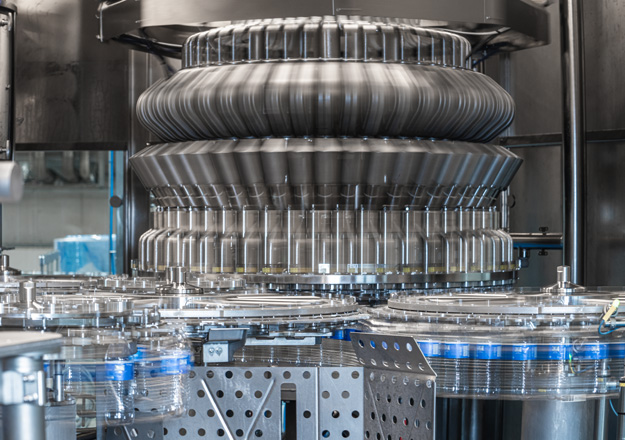
In our core Filling and Packaging Technology segment, we plan to continue expanding the lifecycle service (LCS) business. With our LCS products, customers significantly reduce operating costs and achieve lasting increases in production efficiency. We build customer loyalty through our individually configurable Modular Service Agreements (MSAs), the Lifecycle Alliance package, and personal support provided by our LCS experts. Overall, the LCS business is expected to grow faster than the installed machine base in coming years so that, in the medium to long term, three out of every four new machines and lines will be supported by our own service team. To this end, the company will continue to invest in the service network and the quality of the services provided.
Faster commissioning of our systems at customers’ sites will not only increase customer satisfaction, but will also enable us to deploy our field assembly staff more efficiently and flexibly.
Repositioning in low-to-medium output range
The planned repositioning of the two group companies Kosme and Gernep will enable us to lastingly strengthen our competitiveness in the low-to-medium performance range (Compact Class) within the core segment.
Process Technology
Continuation of successful strategy: diversification increases profitability and resilience
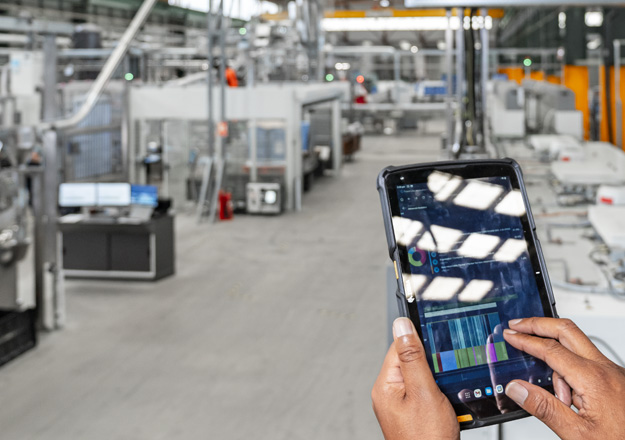
The Process Technology segment has developed very positively in recent years and will continue to pursue its established strategy. Energy-efficient solutions for beverage production, resource-efficient water treatment and technologies for the biotechnological production of plant proteins all benefit from the global megatrends of reducing carbon emissions and water scarcity. Krones will continue to drive forward its diversification into these markets, which are expected to show above-average growth in the medium and long term.
A major contribution to profitable growth in Process Technology will stem from the expansion of the LCS and components business. The latter benefits from the broad product range provided by Ampco Pumps – a US manufacturer acquired in 2023 – and by Evoguard (valves and pumps), and also from the considerable synergies between these two Krones subsidiaries. With the acquisition of GHS Separationstechnik in the reporting period, we have added a solid-liquid separation technology that can be used to process viscous fluids such as vegetable oils, juices and plant-based foods.
The Process Technology segment will also further optimise its cost structure by continuously expanding its global footprint and the associated supply chains, particularly in India and the US. More efficient structures and processes will also contribute here. Krones also intends to exploit emerging opportunities in the fast-growing North American and Asia/Pacific markets.
Intralogistics
Market with above-average growth potential
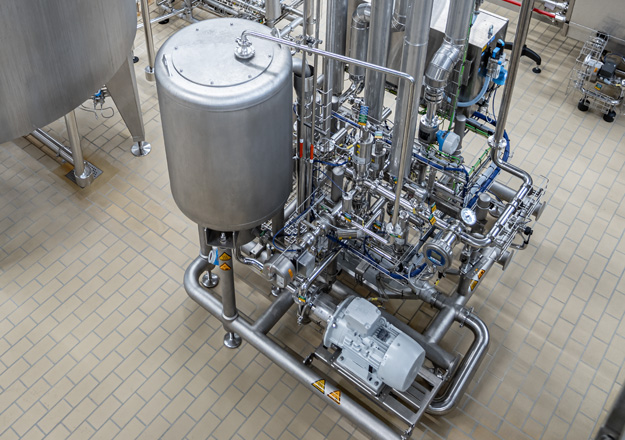
Despite the current difficult economic conditions, the market for automated warehouse logistics will grow faster than the global economy in the medium and long term. The main driver of this growth is the increasing demand for fast and efficient order processing. Our Intralogistics segment, with subsidiary System Logistics, benefits from the dynamic market with innovative and sustainable solutions. As well as saving energy and lowering operating costs, our automated products increase efficiency and reduce the number of operating personnel required, thus countering the skills shortage.
System Logistics will drive profitable growth primarily with automated order picking systems and expansion of the service and software business. Krones also plans to expand its global footprint in the Intralogistics segment and focus more on sectors beyond beverages and liquid foods, such as food wholesaling.
The regional focus is on non-European markets. Expansion of the sites in India and the US and new subsidiaries in China and Canada will contribute to growth and diversification.
Finance
Strong cash position enhances resilience and enables future investment from own resources
Thanks to the positive business performance and a free cash flow (before M&A activities) of €282.9 million in the reporting period, Krones has further strengthened its capital and financial resources. At the end of 2025, Krones had an equity ratio of 42.2% and a net cash position of €548.2 million. In addition, the company has €888.0 million in undrawn credit lines. This strong financial and capital structure lends the company the necessary stability and resilience in these politically and economically volatile times. Its comfortable equity and liquidity base also enables Krones to make strategic investments in growth and for the future out of internal resources and thus further strengthen its competitiveness.
Krones will continue to spend some 4% to 5% of revenue on research and development. In addition, the company plans capital expenditure of around 4% of revenue in the coming years (2025: 3.3%). This spending will go into replacement investment, projects to improve efficiency within the company, expansion of the global footprint, growth initiatives and intangible assets such as software. Internal sustainability projects (Scopes 1 and 2) continue to account for a proportion of capital expenditure.
Acquisitions remain part of Krones’ strategy, with the short-term emphasis on the rapid and successful integration of recent acquisitions. When identifying potential future acquisitions, we focus on medium-sized, profitable companies that complement the existing portfolio technologically and regionally or provide access to markets beyond the beverage and liquid food industry.
Following the acquisition of Ampco Pumps in 2023 and Swiss injection moulding manufacturer Netstal in 2024, we continued to implement our acquisition strategy with smaller acquisitions in the reporting period. By acquiring a 60% stake in GHS Separationstechnik GmbH, Landshut, Germany, Krones has strengthened its product portfolio in process technology with decanter centrifuges, an important product for the separation of solids and liquids. These are used in applications such as processing vegetable oils, juices, alternative foods and PET recycling. With the acquisition of 100% of Can Systems Worldwide, B.V., Deventer, the Netherlands (CWS), Krones has supplemented its capabilities in canning. CSW manufactures specialised machinery and equipment for handling can ends and supplies international customers from the beer, beverage and food industries.
Krones remains committed to sharing its success with shareholders through dividends. The company’s dividend strategy is to pay out 25% to 30% of consolidated net income to the shareholders of Krones AG. Over the past several years, the company has aimed for the upper end of this range.
Continuously improving free cash flow and ROCE, maintaining stable working capital to revenue ratio
With regard to key financial performance indicators, alongside revenue growth, the EBITDA margin (earnings before interest (financial income/expense), taxes, depreciation and amortisation) and return on capital employed (ROCE), Krones places a strong focus on free cash flow. To achieve the ROCE target of over 20% by 2028 (2025: 19.1%), we will further increase EBIT through our profitable growth strategy. Capital expenditure and working capital are expected to increase roughly in step with revenue over the years ahead, thus keeping a stable working capital to revenue ratio.
Capital expenditure and working capital also significantly influence the development of free cash flow, which is a further important parameter. The basis for a medium-term improvement in free cash flow is our profitable growth strategy, which will be reflected in rising operating cash flow.
Krones adopts medium-term targets to 2028
The stable market environment and the continued robust demand for our products and services make us confident that Krones will continue on its profitable growth path in the years ahead. On this basis, in July 2024, the company adopted ambitious financial targets for the period up to 2028.
The company plans to increase consolidated revenue to around €7 billion by 2028 (2025: €5.7 billion). Profitability is also set to improve. The mid-term target for the EBITDA margin is between 11% and 13% (2025: 10.6%). For the third financial target, return on capital employed (ROCE), Krones is aiming for more than 20% by 2028 (2025: 19.1%).
Alongside the financial targets, Krones also pursues other strategic group targets. These are summarised in the following table:
The Krones team: the most important success factor for sustained positive business performance
Krones’ employees are and will always be the basis of our future success. The steadily growing Krones team have demonstrated over the past few years that they can adapt quickly and flexibly to changing conditions. Our employees strive to fulfil our customers’ diverse wishes and needs in the best way possible. The team spirit, expertise, creativity and commitment of the Krones workforce make the company resilient and successful.
In “Solutions beyond tomorrow”, we have developed an ambitious vision that extends far into the future. In order to make this a reality, we need a clear strategy and also a strong team. To continue attracting motivated and well-qualified employees for Krones, we have enhanced our employer brand to highlight what makes Krones special. Our employer brand, which we have aligned with our vision of “Solutions beyond tomorrow”, is designed to attract new talent and strengthen the loyalty and motivation of the existing workforce. The high level of qualification of our employees and managers is a key factor in Krones’ success.
In the coming years, Krones will add to its workforce, particularly in IT, software and service, and also in emerging markets.

Financial performance indicators
Krones’ management primarily uses the following most significant financial performance indicators to steer the group and its three segments:
- Revenue growth (from 2026, revenue growth adjusted for currency translation effects)
- EBITDA margin
- ROCE – return on capital employed – the ratio of EBIT to average net capital employed in the past four quarters. Net capital employed is defined as non-current assets (excluding goodwill and financial assets) plus working capital.
In order to strengthen our market position and utilise economies of scale, we aim in the medium term to achieve profitable revenue growth (from 2026, revenue growth adjusted for currency translation effects) in all three segments.
From the 2026 financial year, our first financial performance indicator is revenue growth adjusted for currency translation effects. Until the 2025 financial year, our first financial performance indicator was revenue growth. The reason for the change is the increased volatility of exchange rates, which makes it very difficult to produce reliable forecasts for exchange rate developments and impacts revenue forecasting. Krones calculates revenue growth adjusted for currency translation effects by translating the revenue of foreign group companies that prepare their financial statements in foreign currencies into the reporting currency (the euro) using the previous year’s average exchange rates instead of those for the current year. The resulting revenue in euros for the reporting period is compared with the reported revenue (not adjusted for currency translation effects) for the previous year.
Earnings before interest, taxes, depreciation and amortisation (EBITDA) is a key earnings performance indicator. Profitability, measured as the EBITDA margin (EBITDA as a percentage of revenue) is among our key targets and parameters. The EBITDA margin indicates the company’s profitability in relation to revenue, irrespective of the tax rate, financial income/expense and depreciation and amortisation.
Since the 2022 financial year, our third performance indicator has been ROCE (return on capital employed), calculated at Group level. This is the ratio of EBIT (earnings before interest and taxes) to average net capital employed in the past four quarters. ROCE is a very important profitability indicator for the capital markets. Return on capital employed shows investors how efficiently the company makes use of capital. Until the 2021 financial year, our third key performance indicator was working capital as a percentage of revenue.
Other financial key performance figures
In addition to the above, further important performance indicators for Krones are free cash flow (cash flow from operating activities less cash flow from investing activities) and the working capital to revenue ratio. We also take guidance from the development of EBT (earnings before taxes) and the EBT margin (EBT as a percentage of revenue).
Non-financial performance indicators
In addition to financial performance indicators, non-financial targets are also firmly embedded in Krones’ corporate strategy. These are set out in detail in the non-financial statement. Sustainability is an area of major importance and is also the focus of the Krones corporate vision.
Key non-financial performance indicators:
- Percentage of women in management positions
- Greenhouse gas emissions (Scope 1, Scope 2 and Scope 3)
- Water consumption
- Hazardous waste
- Work-related accidents
As part of the Krones Group’s sustainability targets, which the Executive Board officially adopted in the 2020 financial year, the company has set ambitious emission reduction targets along the entire value chain.
- We aim for an 80% reduction in our own carbon footprint (Scope 1 and Scope 2) by 2030, relative to the 2019 baseline.
- For Scope 3 emissions – which are significantly higher and are mainly generated by the operation of our machines and lines at customer sites – we are targeting a reduction of 30% over the same period, again with 2019 as the baseline.
Additional sustainability goals are as follows:
- The company aims to increase the percentage of women in management positions to 20% by 2030.
- The Krones Group is committed to a 10% reduction in hazardous waste and water consumption by 2030, with 2020 as the baseline.
- Reduction in the number of work-related accidents per one million hours worked within the Krones Group by 30% by 2030 (compared with the base year 2020).
Scroll down and click to read parts of the annual report in HTML